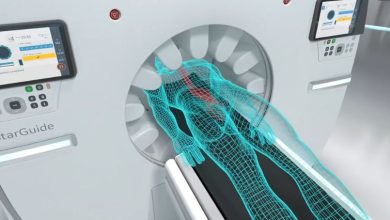
Nuclear medicine is expected to enter a decisive new era—one defined not by incremental innovation, but by the powerful force of convergence. Advances in radiopharmaceuticals, imaging technologies, and theranostics are helping reshape how we detect, understand, and treat disease. What was once a promising frontier is now rapidly becoming clinical reality on a significant scale.
With this transformation comes a clear challenge: medtech must be ready.
The Coming Wave of Precision Radiopharmaceuticals
Across oncology, neurology, and cardiology, the pipeline of next-generation tracers and targeted therapies is expanding rapidly.1 Novel PET agents are being explored for their ability to reveal disease biology earlier, while therapeutic radioligands aim to deliver treatment with greater precision. Together, these innovations could shift imaging beyond diagnostic confirmation and make it a more central part of patient management.
This shift is particularly evident in theranostics, where imaging and therapy are intrinsically linked. The ability to visualize molecular targets, select appropriate patients, deliver targeted radiation, and monitor response is helping redefine care pathways. As highlighted in recent industry developments, nuclear medicine is moving beyond detection toward a deeper understanding of disease biology and behavior.
Yet the success of these advances depends on something often overlooked: readiness of the broader healthcare ecosystem.
Infrastructure Lag: A Growing Risk
The pace of innovation in radiopharmaceuticals is outstripping the readiness of many healthcare systems. While new agents are entering clinical trials and advancing towards gaining regulatory approvals, the infrastructure required to support them—imaging hardware, software, workflows, and supply chains—is often struggling to keep pace.
This gap presents real risks:
- Suboptimal utilization of emerging therapies due to lack of compatible imaging systems
- Workflow bottlenecks as departments struggle to manage more complex care pathways
- Limited access for patients in regions without scalable tracer production or distribution
- Missed opportunities for precision care due to insufficient quantitative and longitudinal imaging capabilities
If unaddressed, these challenges could slow the translation of innovation into meaningful patient impact.
What ‘Readiness’ Really Means
Preparing for the next generation of tracers and therapies requires a holistic approach. It’s not simply about upgrading scanners or adopting new software, it’s about building an ecosystem that can support the full lifecycle of precision care.
- Hardware designed for versatility and sensitivity: Future imaging systems must accommodate a broader range of isotopes, including emerging alpha- and beta-emitting therapies. Higher sensitivity, improved quantitation, and flexible energy detection are becoming essential—not optional—as clinicians seek to image increasingly complex biological processes.
- Software that enables quantitative insight: The next wave of nuclear medicine will be data-driven. Advanced analytics, AI-enabled workflows, and kinetic modeling will be important in enabling clinicians to move from qualitative interpretation to quantitative decision-making. This is anticipated to have critical role in supporting therapy planning, dose optimization, and response assessment.
- Integrated workflows for theranostics: Theranostics introduces new operational complexity, requiring coordination across imaging, therapy, and follow-up. Digital tools that unify patient data, streamline scheduling, and support multidisciplinary collaboration will be key to scaling adoption and ensuring efficiency.
- Reliable access to radiopharmaceuticals: Perhaps most importantly, healthcare systems must ensure consistent access to tracers. This includes local production capabilities, scalable manufacturing, and resilient distribution networks—especially as demand is projected to grow dramatically in the coming decade.
From Innovation to Implementation at Scale
The nuclear medicine field is at an inflection point. As recent industry data suggests, the market is expected to expand significantly, driven by rising demand for precision diagnostics and targeted therapies.2 At the same time, chronic diseases such as cancer and cardiovascular conditions continue to place increasing pressure on healthcare systems to diagnose earlier and treat more effectively.
This convergence is shifting the conversation from “what’s possible” to “what’s practical.”
Scaling precision care requires alignment across stakeholders:
- Medtech companies must anticipate clinical needs and design adaptable, future-ready solutions
- Pharmaceutical developers must collaborate closely with imaging partners to ensure compatibility and access
- Healthcare providers must invest in infrastructure and training to operationalize new care models
- Regulators and payers must evolve frameworks to support integrated diagnostic-therapeutic approaches
No single player can solve this alone.
A Cross-Disciplinary Impact
While oncology has been the initial focus of many radiopharmaceutical innovations, the implications extend far beyond cancer care.
In neurology, advanced tracers are enabling the assessment of biomarkers associated with cognitive impairment and supporting the evaluation of neurodegenerative diseases. In cardiology, imaging agents are helping assess coronary artery disease and myocardial function. Other emerging applications include inflammation and infection imaging, with molecular imaging continuing to be explored across a growing range of clinical and research settings.
In each case, the same principle applies: Without the right technological foundation, clinical innovation cannot reach its full potential.
A Defining Moment for Medtech
This is a pivotal moment for the industry. The tools to transform care are no longer theoretical—they’re here, and advancing quickly. The question isn’t whether the next generation of tracers and therapies will arrive. It’s whether the medtech ecosystem will be ready when they do.
Preparing for this future means thinking beyond individual technologies and toward integrated systems of care. It requires investment, collaboration, and a willingness to anticipate—not just react to—what follows.
Ultimately, readiness is what will determine whether this new era of nuclear medicine fulfills its promise: Delivering more precise, personalized, and effective care to patients worldwide.