According to … , hospital construction is one of the fundamental sectors of the country’s healthcare system. Its development requires participation and coordination among engineering companies, contractors, and professionals working in hospital equipment and building services. In this regard, the Iranian Hospital Builders Association operates with the aim of organizing specialized capacities and strengthening cooperation among stakeholders in the industry.
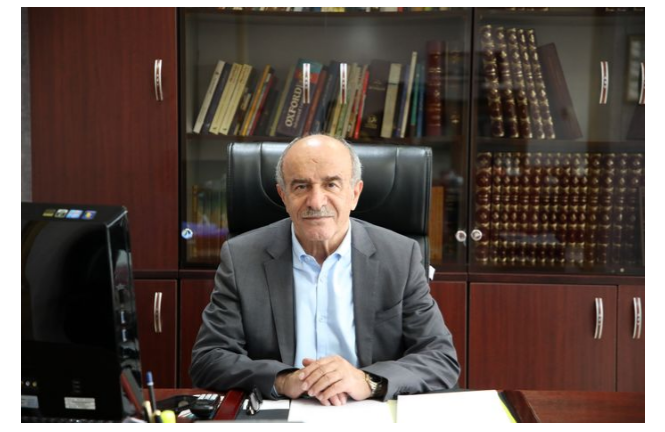
The upcoming HOSPITEX 2026 exhibition provided an opportunity to review the association’s activities and its role in developing the country’s healthcare infrastructure. Accordingly, we spoke with Mohammad Nabi Gohargani, President of the Iranian Hospital Builders Association.
In this interview with Mopena, Gohargani outlined the association’s objectives and programs and discussed the main obstacles facing hospital construction companies, the country’s hospital bed capacity, the need to renovate healthcare facilities, and ways to expand cooperation among industry stakeholders. He also explained the association’s reasons for supporting HOSPITEX 2026 and the event’s potential to establish new partnerships.
The Hospital Builders Association: Bringing Together Specialized Industry Capabilities
Explaining the association’s objectives and mission, Gohargani stated that the specialized economic organization was established to coordinate the capacities of companies active in hospital design, consulting, and project implementation. It currently has 53 member companies, including 15 engineering consultancy firms and 38 contracting companies.
He noted that the association was officially established on April 24, 2018, under the supervision of the Iran Chamber of Commerce. Its main objectives include strengthening cooperation among hospital construction companies, organizing specialized activities, improving the quality of hospital and healthcare facility design, construction, and maintenance, and increasing investment efficiency.
Gohargani also identified knowledge and expertise transfer, improving the business environment, identifying and pursuing legal and operational obstacles facing the hospital construction industry, and protecting members’ legal rights and interests as other key areas of the association’s work.
He added that participation in specialized exhibitions and industry events, as well as establishing effective relationships with hospital equipment and building services manufacturers, are also pursued to introduce the capabilities of this sector.
Liquidity Shortages, Inflation, and Unrealistic Tender Prices: Major Obstacles Facing Hospital Builders
Discussing the main challenges hospital construction companies face in implementing infrastructure projects and developing healthcare facilities, Gohargani stated that these companies encounter a combination of financial, managerial, technical, operational, and legal difficulties. These challenges result in higher costs, longer project completion periods, and reduced investment efficiency in the healthcare sector.
Referring to financial difficulties, he explained that insufficient liquidity in line with contractual schedules, economic fluctuations, rising construction material and equipment prices due to excessive inflation, and prolonged contract periods are among the main factors affecting the implementation of hospital projects.
The President of the Iranian Hospital Builders Association also identified management and inter-agency coordination problems as additional challenges.
He continued that unrealistic price offers by some contractors during tenders, intense competition in bidding processes, and employers accepting unreasonably low prices are among the issues facing hospital construction companies.
According to Gohargani, limited adoption of modern construction and management technologies, along with challenges related to post-construction operation and maintenance, are other issues that require greater attention in industry planning.
Emphasizing that healthcare infrastructure development cannot be reduced to the physical construction of hospitals alone, he stated that the most important requirement is coordination between financing, specialized design, standard construction, equipment installation, and operational readiness.
In fact, he explained, a project can only be considered successful when a hospital is ready to provide healthcare services on schedule, at a controlled cost, and with the expected quality.
Iran’s Hospital Bed Capacity Falls Short of International Standards
The President of the Iranian Hospital Builders Association went on to discuss the aging condition of some of the country’s hospitals and the need to modernize healthcare infrastructure.
He stated that, according to World Health Organization standards, there should be three hospital beds for every 1,000 people. However, Iran currently has approximately 1.9 beds per 1,000 people, compared with 2.8 in Turkey.
He added that the gap is even wider when Iran is compared with some other countries. Hospital bed capacity reaches six beds per 1,000 people in European countries, nine in Oman, and 12 in Japan.
Referring to the condition of existing hospital beds, Gohargani stated that approximately 50,000 beds are located in aging hospitals and require structural reinforcement, replacement, or safety improvements. Therefore, renovating and upgrading the safety of outdated hospitals must be considered alongside expanding new capacity.
He also highlighted the scale of unfinished projects, explaining that approximately 40,000 hospital beds are currently under construction but remain incomplete. With the current level of funding, completing these projects could take another 10 years or more.
Rethinking Hospital Design in the Era of Artificial Intelligence and Advanced Technologies
Referring to technological developments in healthcare, the President of the Iranian Hospital Builders Association emphasized the need to focus on the next generation of hospitals.
He stated that, with the growing adoption of artificial intelligence and advanced technologies, next-generation hospitals will certainly differ significantly from today’s conventional physical healthcare facilities.
He added that comprehensive studies and planning for next-generation hospital design should be carried out using reliable international resources and global partnerships, ensuring that the country’s healthcare infrastructure develops in line with technological progress and future needs.
Discussing proposed solutions for renovating and upgrading healthcare infrastructure, Gohargani identified securing sustainable financial resources in proportion to the needs of the healthcare sector as a fundamental requirement. He also emphasized improving efficiency and making greater use of private sector capabilities.
He identified the development and modernization of healthcare spaces, along with the adoption of advanced technologies in the design, construction, and management of next-generation hospitals, as other priorities.
According to Gohargani, improving maintenance management, implementing preventive maintenance programs, and developing a national plan for hospital resilience and continuity of operations should also be included in healthcare infrastructure development strategies.
The association’s president further identified reforming tariffs to encourage private sector investment in hospital construction and management, as well as compensating for increases in healthcare service costs through health insurance tariffs, as other necessary measures.
Referring to the need to determine the future of unfinished hospital projects, he stated that transferring hospitals with less than 50 percent physical progress to qualified investors and operators, with the aim of completing and commissioning them and preventing resource waste, could be an effective solution.
He also stressed that constructing replacement hospitals for outdated healthcare facilities should be included in development plans.
Cooperation with Manufacturers: Essential for Completing the Hospital Construction and Equipment Supply Chain
In another part of the interview, Gohargani described expanding cooperation between hospital construction companies and other healthcare industry stakeholders as essential to improving the sector.
He stated that greater collaboration among hospital builders, medical equipment manufacturers, building services companies, engineering consultants, contractors, and producers of construction materials and technologies is necessary for the advancement of the country’s hospital construction industry.
He added that constructing and equipping a hospital requires cooperation among various engineering, medical, construction, and industrial disciplines. Therefore, the Iranian Hospital Builders Association can serve as a communication and coordination link among stakeholders throughout the hospital construction, equipment supply, and operation chain.
Explaining the association’s activities in this area, Gohargani said that participating in specialized hospital construction exhibitions, identifying manufacturers of hospital equipment and building services systems, and establishing cooperation opportunities between hospital construction companies and equipment manufacturers are among the initiatives being pursued.
He also identified creating opportunities for negotiations and business partnerships as another area of activity.
He continued that establishing direct communication between hospital design and construction companies and manufacturers of medical equipment and specialized building services systems, as well as signing cooperation agreements, are among the measures taken to strengthen industry relations.
Gohargani also referred to specialized meetings and joint conferences as other initiatives aimed at improving communication among companies operating throughout the healthcare facility construction and equipment supply chain.
HOSPITEX 2026: An Opportunity to Showcase Hospital Builders’ Capabilities and Expand Industrial Cooperation
Responding to a question about the association’s objectives in supporting the International Exhibition of Hospital Construction, Equipment and Facilities (Iran HOSPITEX 2026), Gohargani stated that this support should be viewed within the framework of the association’s mission to advance the hospital construction industry, showcase specialized companies’ capabilities, and strengthen relationships among stakeholders throughout the healthcare construction and equipment supply chain.
Emphasizing the multi-sector nature of hospital construction, he explained that hospital development is not merely a construction activity. Rather, it encompasses several specialized fields, including engineering, architecture, building services, medical equipment, information technology, investment, and facility management.
According to Gohargani, HOSPITEX can provide a platform for bringing these sectors closer together and establishing new partnerships between domestic and international companies.
Explaining the association’s objectives in supporting the exhibition, he identified showcasing the capabilities of Iranian hospital construction companies as one of its main priorities. Establishing connections between hospital builders and equipment manufacturers, as well as expanding cooperation among construction and building services companies, are other objectives.
The President of the Iranian Hospital Builders Association also identified supporting domestic manufacturing and localizing technology as important areas of focus.
He added that attracting investment, expanding the market for hospital projects, improving technical knowledge, exchanging experience, providing opportunities to introduce member companies’ capabilities, and establishing new partnerships and joint ventures are also among the objectives behind the association’s participation and support for the exhibition.
Dedicated Pavilion and B2B Meetings: The Association’s Proposals for HOSPITEX
Gohargani further emphasized the need to translate support for the exhibition into practical and effective measures.
He stated that, to ensure the association’s support goes beyond symbolic participation, a series of specific initiatives should be considered.
He identified establishing a dedicated association pavilion as one of these proposals, explaining that the pavilion could introduce member companies, their project portfolios, and their major achievements, allowing the capabilities of the country’s hospital construction industry to be presented to visitors and other stakeholders in a coordinated manner.
The President of the Iranian Hospital Builders Association also proposed organizing B2B business meetings, adding that face-to-face sessions between hospital construction companies, equipment and building services manufacturers, and investors could create valuable opportunities for negotiations and new partnerships.
He identified introducing the country’s priority projects as another important proposal, explaining that presenting opportunities for hospital construction, expansion, renovation, and structural reinforcement at the exhibition could help industry stakeholders and investors become familiar with the existing potential in this sector.
Gohargani also proposed holding a specialized hospital construction conference, where topics such as financing challenges, technical standards, emerging technologies, and hospital renovation could be discussed.
He further emphasized the importance of establishing an industrial cooperation working group, which could identify shared capabilities among companies and follow up on agreements reached during the exhibition.
The association’s president identified creating opportunities for signing cooperation agreements as another proposed initiative. He noted that collaboration among the association, equipment manufacturers, construction industry organizations, and building services companies could strengthen relationships and create greater synergy across different segments of the hospital construction industry.
Concluding his remarks, Gohargani identified showcasing international capabilities as another important area for strengthening participation in HOSPITEX 2026.
He emphasized that establishing relationships with foreign companies to facilitate technology transfer and cooperation on joint projects is among the initiatives that could be pursued through the exhibition.
End /