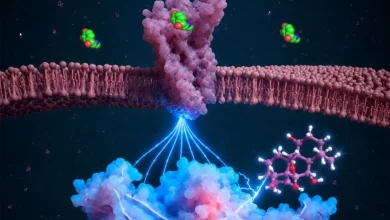
Of all the fields in which we publish at Nature Biomedical Engineering, none has witnessed such a meteoric rise in submission volume and quality over the past 5 years as artificial intelligence (AI) in medicine. An umbrella term, AI in medicine encompasses a wide array of tools, including those to mine electronic healthcare records, design clinical trials, diagnose disease, predict patient response to therapy, run robotic instruments, write notes on behalf of clinicians and much more.
Despite the establishment of numerous, high-profile tools across this spectrum, whether these tools can reliably deliver meaningful benefits to patients, clinicians or health systems remains unclear. In many ways the field is still in its early days in terms of understanding how many models work, when and why they fail, and what this means for clinical translation.
This Focus issue presents a suite of Perspectives and Comments critically examining the current state of the art in medical AI alongside research Articles that push the boundaries of tool development and application. Taken together, they reflect our editorial interest in not only promoting exciting new technological advances, but also in slowing down to identify problems and take a careful look at what is needed in practice to advance the field.
One theme that emerged across this Focus issue is causality in medical AI. While often overlooked in pursuit of performance metrics, causality is critical for establishing trust that AI reasoning is avoiding bias and finding truthful, rather than spurious, correlations. Along these lines, a forward-looking Perspective from Hong-Yu Zhou and colleagues describes the potential of large reasoning models to emulate the analytical processes of humans. Their proposed medical reasoning AI (MRAI) differs from conventional medical AI in terms of three key criteria: continuous clinician-in-the loop interaction, the integration of multiple medical information systems with a unified reasoning framework, and supervised reflection and adaptation. These features could produce an AI tool that acts as a clinical collaborator with transparent and auditable diagnostic reasoning.
A second Perspective from Munib Mesinovic and colleagues describes causal graph neural networks and the important part they could play in the future of AI in healthcare. They note that existing AI systems for use in the clinic are brittle, meaning they don’t generalize well across settings. The authors also note that current systems can extend discriminatory patterns embedded in historical data and often fail to provide reliable mechanistic insight. They stress that this brittleness comes from relying on statistical associations rather than causal mechanisms. To address these issues, they promote the use of causal graph neural networks, which combine graph-based representations of data with causal inference. In addition to introducing the technology, they discuss applications and describe the potential benefits of developing causal digital twins for in silico experimentation and personalized medicine.
Continuing the theme of causality, a Comment from Bin Sheng and colleagues champions the use of neuro-symbolic AI in medicine. The authors stress that when it comes to AI in medicine, performance alone is insufficient for clinical trust, and that so-called black box approaches raise safety and trust concerns. As a potential solution, they support the use of neuro-symbolic AI, which integrates data-driven deep learning with symbolic reasoning for accurate and accountable AI.
Our Focus issue also includes three pieces that look critically at specific topics in medical AI that are experiencing a lot of hype, highlighting problems and providing potential solutions. A Perspective from Jia Wu and colleagues focuses on foundation models (FMs) in imaging, discussing whether the hype surrounding FMs can be turned into clinical reality. The authors note that while FMs are moving the field towards composite systems that integrate imaging, pathology, genomics and clinical records, modern medicine is moving towards granular sub-specialization, contributing to a gap between what FMs offer and real-world clinical value. To separate reality from fiction, they introduce REAL-FM (Real-world Evaluation and Assessment of Foundation Models), a multi-dimensional framework assessing data, technical readiness, clinical value, workflow integration and responsible AI. Using REAL-FM, the authors find that FMs excel at pattern recognition, but struggle when it comes to causal reasoning, robustness and safety. The authors provide a roadmap forward for FMs that could make them an invaluable part of a clinician’s toolkit.
A Comment from Hamid Tizhoosh also explores the hype surrounding FMs, this time in the context of digital pathology. He notes that FMs in pathology have yet to meet the expectations set for them, as they suffer from modest accuracy, poor generalization, and sensitivity to what ought to be trivial changes in image quality. These struggles are explored in detail, leading to the reasoned opinion that rather than experiencing growing pains from being in the early days of development, pathology FMs are limited by profound conceptual mismatches in representation, learning and cross-domain transfer that cannot be easily overcome. The piece concludes by stressing that the field ought to redefine what is needed in the clinic and promote systems that perceive tissue images as pathologists do.
A final Comment from Tien Yin Wong and colleagues also takes a critical look at hype, in this case focusing on the use of large language models (LLMs) in medicine. While they do not dispute the power of LLMs, they note that these models require substantial computational resources, rely on cloud-based deployment and close-source features, and are expensive to train, limiting their broader applicability. Instead, they promote the use of small language models (SLMs), which by nature of their smaller footprint are much more deployable in practice, especially in low- and middle-income countries. They discuss the advantages and limitations of SLMs in medicine, making a strong case for developers to take another look at SLMs for making practically useful tools for the clinic.
Rounding out our Focus issue, we present 12 research Articles spanning a range of applications in medical AI and biomedical research that propel the field forward, ideally towards meaningful biomedical discovery and clinically impactful tools.
Three papers advance the use of AI in biomedical imaging and radiology, specifically for chest imaging. An Article from Liang, Guo, He, Xu and colleagues introduces MedMPT, a self-supervised multimodal model trained on chest computed tomography (CT) scans and radiograph reports, which excels in diverse clinical tasks associated with respiratory diseases. An Article from Zhang, Wang and colleagues also advances AI for assessing chest pathology. Their generalizable vision–language model for Annotation-Free pathology Localization (AFLoc) allows expert-level, annotation-free localization and classification for chest X-rays across multiple diseases. The model can also be adapted to other imaging modalities, such as histopathology and retinal fundus imaging. An Article from Hamamci and colleagues describes a suite of tools to improve the use of AI in three-dimensional CT. The first, CT-RATE, is a large public dataset of three-dimensional medical images paired with corresponding text reports. The second, CT-CLIP, is a contrastive language–image pretraining framework designed for broad applications that outperforms state-of-the-art fully supervised models across all key metrics. The third combines CT-CLIP’s vision encoder with a pretrained LLM to create CT-CHAT, a vision–language foundational chat model for three-dimensional chest CT volumes.
Staying with medical imaging, an Article from Guo and colleagues introduces Sonomate (mate of a sonographer), an AI assistant that facilitates real-time interactions between an ultrasound instrument and a user during fetal ultrasounds, which can detect anatomy and can be used in visual question answering in a step towards AI-assisted sonography. An Article from Hollon and colleagues describes Prima, an AI FM for neuroimaging that supports real-world clinical magnetic resonance imaging studies as input. Prima performs accurately across 52 radiological diagnoses from major neurological disorders with fairness across groups and further offers explainable differential diagnoses, worklist priority for radiologists, and clinical referral recommendations. Finally, an Article from Tan and colleagues introduces GaitDynamics, a generative FM trained on diverse human gait patterns that can accurately and efficiently assess kinematic data for optimizing gaits and treating disease.
We also highlight advances in AI for biomedical research. Three papers highlight the power of machine learning in genomics to better understand human health and disease. Wong, Yang, Yao and colleagues present single-cell translator (scTranslator), a pre-trained large generative model that can infer the single-cell proteome based on the transcriptome with high accuracy across profiling techniques and diverse cell types for superior downstream data analysis. An Article from Peng, Xue and colleagues describes LyMOI, which combines deep learning and LLM reasoning for omics interpretation, and was used to interpret 1.3 TB of genomics data to expand the knowledge of autophagy regulators. An Article from Zhao and colleagues rounds out the trio by introducing spEMO, a computational framework that unifies embeddings from pathology FMs and LLMs for spatial multi-omics analysis that surpasses single-modality models across diverse tasks in basic research, disease prediction and medical reporting.
The final three papers in this issue introduce new concepts for using AI in biomedical research. In an Article from Sun and colleagues, the researchers explore the ability of 16 LLMs to accurately generate data visualizations from simple requests. This benchmarking revealed accuracy below 40% and prompted the team to develop an AI agent that enables users to codevelop analysis plans with LLMs and execute them within an integrated environment. Marsico and colleagues present BioPathNet, an interpretable framework for link prediction in biomedical knowledge graphs that performs well across diverse tasks including identifying drug indications and understanding long non-coding RNA–target interactions. Finally, as depicted in this month’s cover image, Maier-Hein and colleagues describe ‘xeno-learning’, a cross-species knowledge transfer concept, and show using hyperspectral images from diverse animals that changes resulting from pathologies or surgical manipulation in one species can be transferred to a new species, opening the door for large-scale secondary use of preclinical animal data for human application.
While these research papers underscore where these technologies can take us, they still require further scrutiny, validation, and real-world proof of their mettle, especially those developed to be used in the clinic. Looking towards the future, we see advances that are already upon us, such as AI agents for diverse tasks, as well as increasingly human-independent models for diverse applications. However, while we are excited for the possibilities, we hope that engineers and developers stay grounded in the needs of clinicians and biomedical researchers. To have value in the clinic, models must be not only accurate, but robust, generalizable, fair, stable, accessible, interpretable, sustainable, trustworthy and user-friendly.
We also strongly recommend that engineers work with physicians, pathologists and radiologists at the earliest stages of design, learning directly from as many as possible what they perceive are their unmet needs, rather than designing solely to offer modest improvements over the state of the art by metrics that may or may not align with clinical decision-making. We do not think that AI will replace doctors, but hope that engineers can make smartly designed, robust tools that can be seamlessly integrated into existing clinical workflows to offer well-reasoned advice, save physicians time, and ultimately improve outcomes for human health.
source: nature