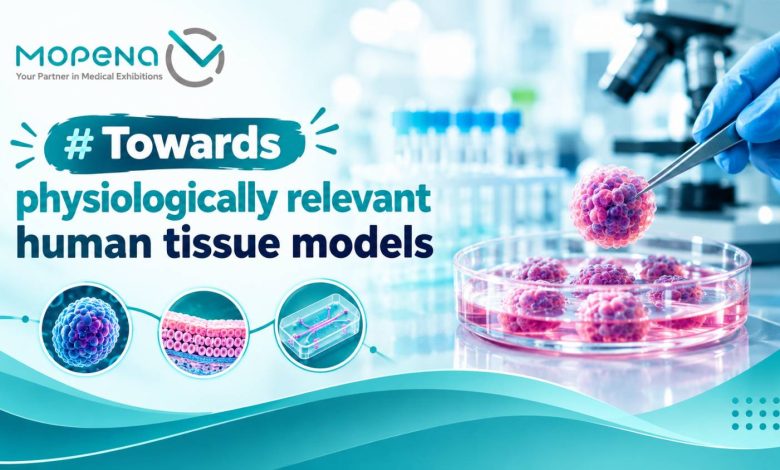
The full complexity of human biology can hardly be captured by any single experimental model. As stated in the other Editorial in this issue, animal studies remain indispensable for understanding physiology, disease progression and therapeutic responses at the organism level. At the same time, organoids, organs-on-chips and other microphysiological systems are expanding the available experimental toolbox, providing opportunities to investigate human-specific biology that is often difficult or impossible to access in animals, and to reduce animal use.
The growing adoption of these New Approach Methodologies by a diverse scientific community, as highlighted in a Comment by Tavakol and Vunjak-Novakovic on a series of talks on tissue engineering, reflects not the replacement of one model by another, but the recognition that complementary systems can generate distinct and synergistic forms of evidence. However, as expectations for these technologies to become standard grow, so does the need for the models to faithfully recapitulate the biological complexity of human tissues. The articles in this month’s issue of Nature Biomedical Engineering illustrate how the field is responding to this challenge.
A collection of Reviews explores the design, across diverse biological contexts, of physiologically relevant models that capture disease mechanisms and the unique features of individual tissues. In a detailed Review Article, Kaplan, Vunjak-Novakovic and colleagues identify shared pathological hallmarks of fibrosis, a pathological process shared across multiple organs and diseases, and propose practical design principles for modelling fibrosis in vitro. Whereas fibrosis transcends organ boundaries, other conditions require models that reproduce specialized features of individual tissue niches. Sozen and colleagues trace the evolution of in vitro endometrial models from two-dimensional cultures to organoids and assembloids capable of capturing tissue remodelling and maternal–embryo interactions, and describe how advances in endometrial engineering are transforming studies of implantation, reproduction and women’s health. Two additional Reviews turn our attention to modelling biological interactions across tissues, organs and microenvironments. Wu and co-workers discuss the reconstruction of drug absorption, distribution, metabolism, excretion and toxicity across multiple organs, while Jalili and colleagues describe the modelling of gastrointestinal disease in systems that capture host tissues alongside their dynamic microenvironments. Collectively, these articles emphasize that biological context is often as important as cellular composition for faithfully recapitulating complex human physiology.
This theme is echoed across multiple research Articles in this issue, in which increased biological complexity in tissue and disease models can capture phenomena often absent from conventional models. A study from Giobbe, De Coppi and colleagues shows that region-specific gastric organoids can self-organize into multi-regional assembloids that support maturation of acid-producing parietal cells and reproduce patient-specific genetic gastric pathology. Separate work by Helmrath, Mahe and colleagues introduces a confined culture strategy that generates large-scale gastrointestinal tissues with a functional enteric nervous system and clinically relevant epithelial surface areas that, when transplanted into animal models, thrive and mature in physiological conditions. Focusing on the eye, Gerecht and colleagues derive retinal endothelial cells from human pluripotent stem cells and use them to engineer microphysiological models of the inner blood–retina barrier. Together with a placental microphysiological system developed by Huh and colleagues to study maternal exposure to toxic metals, these studies illustrate how vascular, neural and barrier functions can be integrated into engineered tissues to capture aspects of physiology and pathology that are difficult to model in standard culture systems.
A second set of studies illustrates how human in vitro models can be leveraged to study disease mechanisms. Combining stem cell engineering and glomerulus-on-a-chip technologies using isogenic induced pluripotent stem cell lines, Musah and colleagues link congenital heart disease-associated SMAD2 mutations to abnormal kidney development and impaired filtration barrier function. Ingber and co-workers engineer a human inflammatory bowel disease chip that incorporates epithelial, stromal and immune compartments under mechanical stimulation; they identify fibroblasts, pregnancy-associated hormones and peristalsis-like deformations as contributors to disease progression. Mechanical forces also take centre stage in a second study from Huh and colleagues, who use a mechanically active airway model to uncover pathways driving fibrosis and vascular remodelling in asthma. Meanwhile, Conboy, Stahl and colleagues engineer an adipose–liver microphysiological system that recapitulates aspects of human ageing within days, thus enabling the study of decades of ageing mechanisms and candidate rejuvenation strategies. These examples underscore the potential of using human tissue models to dissect interactions among genetics, mechanics, inflammation and environmental cues that would be difficult to isolate in in vivo animal models.
Several Articles showcase how engineered tissues contribute directly to therapeutic discovery and regenerative medicine. Traverso and colleagues report an oesophageal tissue screening system for identifying formulations that enhance mucosal drug absorption, providing a route towards improved delivery of biologics. A scalable manufacturing strategy from Montserrat and co-workers enables the production of kidney organoids that can be infused into perfused porcine kidneys and survive transplantation procedures. In the nervous system, Stupp and colleagues establish human spinal cord organoid injury models that reproduce tissue damage and respond to a regenerative therapy previously developed in rodents. Complementing this work, Cheng, Zhu and colleagues engineer anatomically matched thoracic spinal cord organoids able of restoring neural circuitry and motor function after transplantation in mice. Finally, Li, Zhu and colleagues develop a biodegradable matrix that supports blood vessel organoid maturation and integration, promoting neurovascular repair after stroke. These studies highlight how in vitro human and disease models can serve as useful systems for testing interventions and as useful models for repairing damaged tissues.
Tissue functions are shaped by interactions among vascular networks, immune responses, neural circuits, mechanical forces and local microenvironments. The challenge ahead is therefore not simply to engineer ever-more complex tissues, but to determine which aspects of complexity are required to answer specific biological and clinical questions. At Nature Biomedical Engineering, we are excited about models that provide new biological insight, reveal disease mechanisms, improve diagnosis, accelerate therapeutic development or enable more predictive assessment of safety and efficacy, as opposed to models that use complexity as an endpoint. Many of the major challenges in biomedicine, from neurodegeneration and cancer to inflammatory and metabolic disorders, in fact emerge from crosstalk among organs and physiological systems rather than from the dysfunction of a single tissue in isolation. Human-based and patient-derived systems will be particularly important in this effort, not only because they can capture inter-individual variability and support more personalized approaches to medicine, but also because they offer opportunities to interrogate human biology in ways that are not readily accessible through other experimental approaches.
Equally important will be advances that make these models more reproducible, scalable and broadly deployable. Engineering solutions that improve manufacturing consistency, experimental standardization and throughput will be essential if microphysiological systems, organoids and other New Approach Methodologies are to fulfil their promise as tools for biomedical discovery, drug development and regulatory science.
Looking ahead, increasingly integrated human models may connect multiple tissues and physiological systems, routinely enabling researchers to investigate disease progression, evaluate therapeutic responses and perhaps even test individualized treatment regimens before they are administered to patients. Realizing this vision will require continued advances in reproducibility, standardization and validation, as well as careful integration with evidence derived from animal and clinical studies. The future of the field may ultimately be defined not by how closely engineered tissues resemble native organs, but by whether they generate actionable insights that change how we understand, predict or treat disease.
source: MPO