Although many industries continue to treat additive manufacturing (AM) as an emerging technology, the medical device sector has already demonstrated its successful commercial adoption of AM for well over a decade. Orthopedic implants, especially titanium-based spinal devices, have led the way by leveraging AM’s ability to produce complex porous structures that support bone in-growth and improved osseointegration.
As a result, today’s AM in medical devices has moved well beyond the “prototype only” stage. “AM is now an established production technology for applications where design freedom, porous structures, or patient-specific geometry creates a meaningful clinical or supply-chain advantage,” said Liz Wiederhold, director of program management for Pierceton, Ind.-based Paragon Medical, a medical device contract design and manufacturing partner that supports customers from early concept and product development to commercial production.
Many medical device manufacturers (MDM) use AM as an established production process, especially where complex geometries, patient-specific designs, low production quantities, or structures that are difficult to manufacture conventionally create a meaningful advantage. “At the same time, the industry is becoming more disciplined about where additive makes sense,” said Alex Lothspeich, field applications engineer II for Minneapolis, Minn.-based Protolabs, a digital manufacturing company that provides rapid prototyping and production manufacturing services across technologies including AM, computer numerical control (CNC) machining, and injection molding.
AM is also an essential technology for the growing field of patient-centric customization. Patients are starting to expect to be treated as individuals instead of fitting into a “one-size-fits-most” option. However, a long-standing barrier is the “challenge of getting patient data into an efficient and effective workflow to deliver on customization,” said Gary Turner, CEO and co-founder of Winston-Salem, N.C.-based Myrava, which provides innovative point-of-care (POC) manufacturing solutions for the medical device industry. “We are at the intersection of patient demand and technological capability to be able to meet these individual needs by utilizing AM across the medical device industry.”
AM, which is firmly established in spine and acetabular applications, continues to expand into knees, extremities, and other large-joint procedures.
“The conversation is no longer about proving the value of additive manufacturing,” said Allen Younger, senior business development manager for AddUp in Cincinnati, Ohio, which provides AM and industrial laser systems to MDMs, especially advanced metal AM technologies. “The focus has shifted toward scaling production, improving throughput, and enabling the next generation of implant designs while maintaining the highest standards of quality and regulatory compliance.”
Given the advances in printing technologies and an ever-growing list of printable materials approved for medical use, “larger parts are now becoming more feasible from a cost perspective,” said Cody Bonk, sales engineer for Gwinn, Mich.-based Able Medical Devices, a global contract manufacturer that provides an array of services and capabilities for the orthopedic and medical device industry.
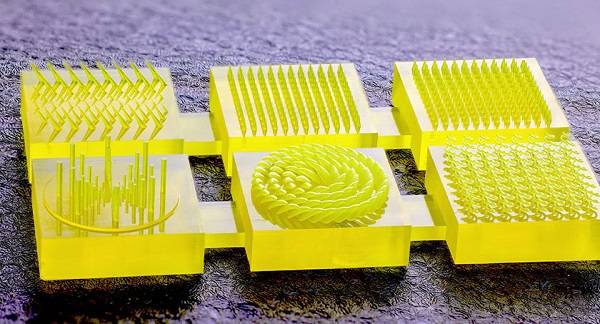
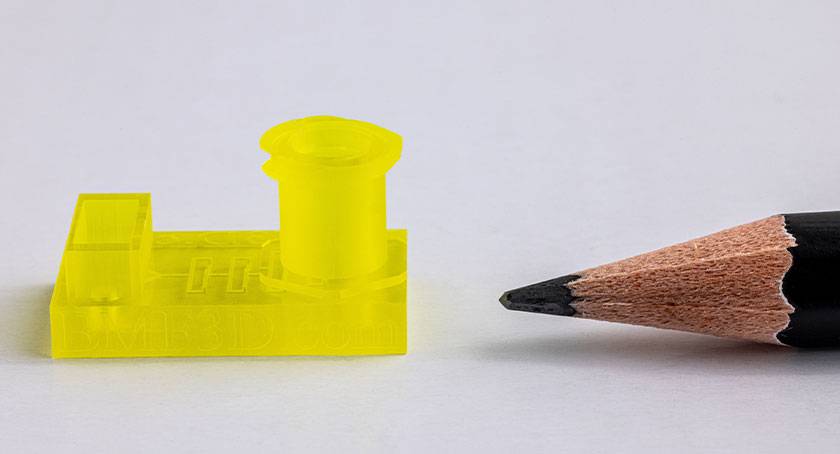
In contrast, micro-precision 3D printing continues to push new boundaries across the prototyping and production process for an array of medtech applications. Traditional manufacturing methods often struggle to meet the rigorous demands of modern medtech, which requires micro-scale features and strict biocompatibility. This is where micro-precision 3D printing is especially valuable. “Its growth in this space is not simply about efficiency or cost,” said Carl Leonard, application development engineer for Maynard, Mass.-based Boston Micro Fabrication, a global provider of micro-precision 3D printing that delivers advanced manufacturing solutions for medtech applications that demand micron-level resolution, accuracy, and precision. “It is also about empowering engineers to tackle previously insurmountable challenges, connect iterative design with production, and accelerate the realization of improved patient outcomes.
Current Trends
MDMs are most interested in speed to market, repeatability, and a lower-risk route to commercialization. They want to know how quickly a concept can be converted into a functional prototype, whether the design is truly optimized for additive manufacturing, and how the process will transfer into stable production. They are also asking for fewer supplier handoffs. “A printer alone does not solve the full problem,” said Wiederhold. “MDMs need partners that can coordinate everything from additive post-processing such as particulate removal to secondary machining processes and final inspection, all while maintaining traceability and clear ownership.”
Such collaborative efforts pay greater attention to the entire manufacturing process, rather than just the printer. “Material traceability, repeatability, post-processing, inspection, heat treatment, surface finish, and process qualification all become increasingly important as a component moves closer to an end-use medical application,” said Lothspeich.
Wiederhold has noticed the convergence of three major AM trends in the medical device industry:
- Patient-specific implants and instruments are becoming more practical as imaging, design, and manufacturing workflows become better connected.
- MDMs are asking for integrated porous features and complex geometries that are difficult or inefficient to create with traditional manufacturing alone.
- Customers want a complete commercialization pathway, not a stand-alone print supplier. They are looking for early design-for-additive-manufacturing input, validated process controls, post-processing, machining, inspection, sterile clean/pack, and regulatory support within a coordinated supply chain.
There is also growing interest in POC manufacturing as a managed service, where medical devices can be designed and produced much closer to the patient and their clinicians. This reduces lead times, improves collaboration between clinical and engineering/manufacturing teams, and enables a more responsive approach to patient care. “At the same time,” said Turner, “healthcare systems want solutions that are supported by robust quality systems and regulatory compliance, not just innovative technology.”
Hospitals and healthcare providers see the value in providing personalized surgeries, with AM serving as a go-to enabling technology for more rapid and tailored solutions for patients and surgeons. This is made possible by key advancements in scanning/imaging technologies and AM methods. “Products can be produced onsite that conform to the unique intricacies of each individual patient, and surgeons can mitigate the amount of time per procedure, size of incisions, and approach methods by using virtual reality systems to simulate their approach for procedure preparation in conjunction with the ability to print accurate anatomical models with biomimetic materials for tactile experience,” said Bonk.
Advances in printable materials are also driving AM innovation. Access to a larger selection of materials, color options, and increasingly advanced AM manufacturing methods creates the ability to mimic human tissues for a wide range of applications. Anatomical models can be produced with varied colors to better distinguish between the varying tissues that surgeons have to deal with when performing surgical operations or routine minimally invasive procedures, such as catheter insertions for heart surgery. “As AM continues to improve and develop, it will become easier to print biomimetic materials to allow for better use of replicas for surgical simulation and improved medical device design/development,” said Bonk.
MDMs are eager to transition from prototyping to functional testing and end-use production. In the design space, fine-feature polymer printing, larger-format metal systems, complex internal geometries, lattice structures, elastomeric materials, and production-oriented photopolymers give engineers options that were not practical a few years ago.
The push for miniaturization and personalization is driven by the need to insert more functionality into ever-smaller devices. This expands the range of applications for existing devices, advancing technologies for implants and diagnostics and transforming solutions for drug delivery and surgical tools. Modern endoscopes are a good example, Leonard noted. “Endoscopes used in gastroenterology now approach less than 7 mm in diameter, while instruments for cardiovascular use feature diameters near 1 mm,” he said. “As these devices get smaller, the time and complexity required to assemble them increase exponentially. By reducing the number of assembly steps, manufacturers can cut cycle times significantly.”
New Tech Advances
While there are significant improvements in medical device manufacturing, such as faster lasers and larger build envelopes, the biggest advancements will not necessarily be the printers or materials themselves, but innovation across the entire digital workflow. Continued advancements in software platforms, automation, machine monitoring, and system integration create a seamless digital thread, from clinical or design requirements through final product delivery. “Rather than operating as a series of disconnected processes and systems, additive manufacturing workflows are becoming increasingly connected, improving traceability and scalability,” Turner added.
Advances in printable materials have opened the door for 4D printing within the medical device space. This AM process utilizes varied materials and AM methods to produce devices that are capable of changing their form and function when subjected to external stimuli (e.g., internalized air pressure, heat, or electrical charge).
“As AM continues to develop, more opportunities will exist for multi-material printers and printing methods to manufacture these 3D and 4D products,” said Bonk. “More studies and data are becoming available every day that detail emerging printable materials and their resultant properties when produced with the constantly growing array of AM methods.”
Lothspeich indicates that technology limits are being pushed in several directions simultaneously. At one end of the spectrum “we’re seeing increasingly fine features and smaller geometries,” he said. “Protolabs’ MicroFine SLA capability, for example, can produce features as small as 0.0025 inches. At the opposite end, direct metal laser sintering and other metal powder-bed fusion systems continue to increase their build envelopes and their ability to manufacture large, highly complex metal components. Innovation is increasingly coming by combining geometry, material, and process intelligently, rather than simply improving machine resolution.”
Historically, engineers have faced the consistent trade-offs of precision versus speed, complexity versus cost, and design freedom versus manufacturability. Today, micro 3D printing fundamentally reframes this equation, delivering a system in which high-resolution, micro-scale geometry and production-viable throughput are no longer mutually exclusive. “Our own projection micro stereolithography (PµSL) technology exemplifies this capability,” said Leonard. “Unlike traditional stereolithography, PµSL projects an entire image layer at once, enabling faster build times without sacrificing detail. It operates across a broad resolution range, from a 10-micron pixel class to 2-micron resolution for the most demanding geometries, with tolerances of ±10 to 25 microns. This enables features such as 50-micron holes, structures that would be impractical to achieve through molding or drilling.”
Recent AM Successes
Success 1: RNDR Medical approached BMF to bring a novel single-use ureteroscope to market, with stringent demands for size, performance, and engineering precision. The micro-scale distal tip needed to accommodate a high-definition camera, illumination, and irrigation channels, all sealed within a 3.3 mm-diameter profile. Traditionally, these features would have required intricate, high-cost micromolding, significantly slowing down the development process. “By leveraging BMF’s micro-precision 3D printing, RNDR Medical accelerated its iteration cycles, moving from design to refined product in days instead of months,” said Leonard.
Success 2: A recurring design challenge is helping MDMs evaluate a concept before all the design decisions have been finalized. AM allows teams to move quickly from a solid model to representative prototypes, compare design and manufacturability, and gather feedback without committing prematurely to production tooling or fixturing. Paragon Medical’s PARAFUZE is a 3D-printed lattice structure that accelerates orthopedic implant development. “The value is not just the geometry itself—it is the combination of established characterization work, regulatory support through a master-file approach, and an integrated manufacturing pathway,” said Wiederhold.
Success 3: Myrava recently announced FDA 510(k) clearance for its new patient-specific, 3D-printed bolus device. Designed to optimize radiation dosing control and accuracy, this clearance is a key step in Myrava’s mission to democratize access to personalized medical devices across healthcare systems nationwide. “FDA 510(k) clearance of our patient-specific bolus empowers clinicians with customized tools to help advance treatment precision and patient comfort,” said Turner. “The Myrava bolus can be manufactured at co-located POC facilities, which provides closer contact to the clinicians for iterative design and faster turnaround times.”
Success 4: Polyether ether ketone (PEEK) has been a trusted material for orthopedic and spinal implants for decades because it closely matches the flexibility of bone, is compatible with medical imaging, and offers long-term durability. However, traditional PEEK has struggled to integrate with bone, often resulting in limited biological attachment. In response, 3D Systems’ EXT 220 MED 3D printer platform can produce porous, hydroxyapatite-enhanced PEEK implants that support both bone on-growth and in-growth. “The findings show a promising path forward for improving osseointegration and advancing the next generation of polymer implants,” said Natalie Byrnes, manager of product development for patient-specific medical technology for 3D Systems, a Rock Hill, S.C.-based provider of 3D printing technologies, materials, and software.
Innovation at the Forefront
An exciting area in AM is patient-specific implants (PSI). AM enables the creation of highly customized implant solutions while preserving the process control and repeatability necessary for regulated medical production. The medical device industry is increasingly moving toward scalable PSI workflows that connect patient imaging, digital design, manufacturing, and delivery into a streamlined process. “This creates opportunities to improve surgical planning, address complex anatomical challenges, and potentially enhance patient outcomes,” said Younger. “As digital workflows continue to mature, we believe PSI programs will become increasingly repeatable, globally deployable, and commercially viable.”
Breakthroughs may be less about new or advanced equipment and more about the maturation of the entire manufacturing ecosystem around AM. As AM develops further toward production, inspecting the finished component alone will not always be the most efficient way to establish confidence in a process. “Better sensors, build monitoring, software, simulation, and more predictive process control have the potential to identify variation earlier and improve repeatability,” said Lothspeich.
3D Systems helped enable the first FDA clearance for an implant from a POC institution. This achievement will lead to more innovation in the POC space. Working alongside the Defense Health Agency (DHA) and Walter Reed National Military Medical Center’s 3D Medical Applications Center (3D MAC), the 3D Systems team supported FDA clearance of the 3D MAC Titanium Cranial Plate (TCP) System. “This milestone was the result of a multi-year collaboration to advance patient-specific medical device manufacturing within a clinical setting,” said Byrnes. “Looking ahead, broader adoption of approved point-of-care manufacturing has the potential to transform healthcare by bringing personalized medical devices closer to the patient.”
Moving Forward
Major breakthroughs will likely come from automation, software integration, and manufacturing intelligence, rather than entirely new printing technologies. Advancements in closed-loop process monitoring, automated quality assurance, digital workflow integration, artificial intelligence, and machine productivity will make AM more scalable and economically attractive. “These improvements help manufacturers reduce variability, increase throughput, and further integrate additive manufacturing into mainstream production environments,” said Younger.
Improved multi-laser and alternative-energy platforms, in-process monitoring, automated support removal, and better-connected inspection data will lead to greater consistency and efficiencies across AM. In the bioengineering space, development teams have successfully 3D-printed capillary networks, implantable structures that mimic native tissue architecture, and complex microarchitectures for effective delivery of nutrients as well as mechanical support.
The range of medical device applications where micro-precision 3D printing is poised to make a significant difference continues to expand. In POC diagnostics, micron-accurate microfluidic channels enable compact, portable analysis platforms. Wearable biosensors benefit from the dense integration of sensing elements within thin, skin-contact form factors. Electronic drug delivery systems rely on precisely defined fluidic pathways and micro-features to govern dosing. Medical imaging demands housings and optical mounts fabricated to the tightest tolerances. “In addition, implantable electronics require biocompatible materials, miniature footprints, and complex internal geometries that additive micro-fabrication is uniquely positioned to provide,” said Leonard.
For Younger, the most exciting development is the convergence of advanced imaging, digital design, and AM in patient-specific healthcare solutions. The industry, he observed, is approaching a point where highly customized patient-specific implants can be produced with the speed, quality, and scalability needed for broader clinical adoption. “The combination of personalization and industrial manufacturing efficiency has the potential to fundamentally change how certain orthopedic procedures are planned and executed,” said Younger. “The ability to deliver customized solutions at scale represents one of the most powerful and transformative opportunities in medical additive manufacturing today.”
An important takeaway is that successful medical AM is a team sport, noted Wiederhold. “The printer is the main focus, but outcomes depend on decisions made across design, material selection, process engineering, quality, regulatory, clean/pack, and supply planning,” she said. “Engaging these functions early prevents a concept from becoming difficult to validate or scale later. The companies that gain the most from additive manufacturing will be the ones that treat it as an end-to-end product and process strategy.”
As innovation continues to advance, more MDMs realize the future is not simply about improvements to specific equipment; instead, it is about creating an ecosystem where clinicians have access to a variety of patient-specific solutions when and where they are needed. “The combination of advanced manufacturing, clinical collaboration, and POC production have the potential to reshape how personalized medical devices, whether physical or digital, are delivered and ultimately improve patient care,” said Turner.
source: MPO